
Non-Monogamy & Polyamory
“Infinite diversity in infinite combinations.” - Vulcan philosophy, Star Trek
Relationships don’t have to follow a single template to be healthy, loving, and committed. Whether you’re exploring non-monogamy, practicing polyamory, navigating an open relationship, or considering opening a previously monogamous relationship, therapy can help you create agreements, communication patterns, and connections that align with your values and support sustainable, ethical partnerships.
What is non-monogamy?
Non-monogamy is an umbrella term for relationship structures that involve romantic and/or sexual connections with more than one person. Like an ice cream shop, there are countless flavors and combinations, and each relationship’s version of non-monogamy will look different.
Types of non-monogamy can include:
Polyamory
Open relationships
Relationship anarchy
Swinging
Mongamish
And more!
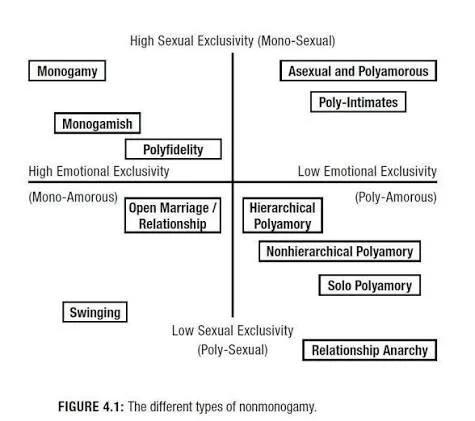
These categories are not rigid or exhaustive, and many people move between structures or combine elements from multiple relationship styles.
Image from Polysecure by Jessica Fern
Why do people seek therapy for non-monogamous relationships?
Non-monogamous relationships face many of the same challenges as monogamous relationships:
Communication difficulties
Trust concerns
Conflict resolution
Intimacy issues
Life transitions
Non-monogamous relationships may also involve unique conversations:
Navigating being a hinge partner
Metamour relationships (relationships with your partners’ partners)
Time management
Navigating multiple attachments